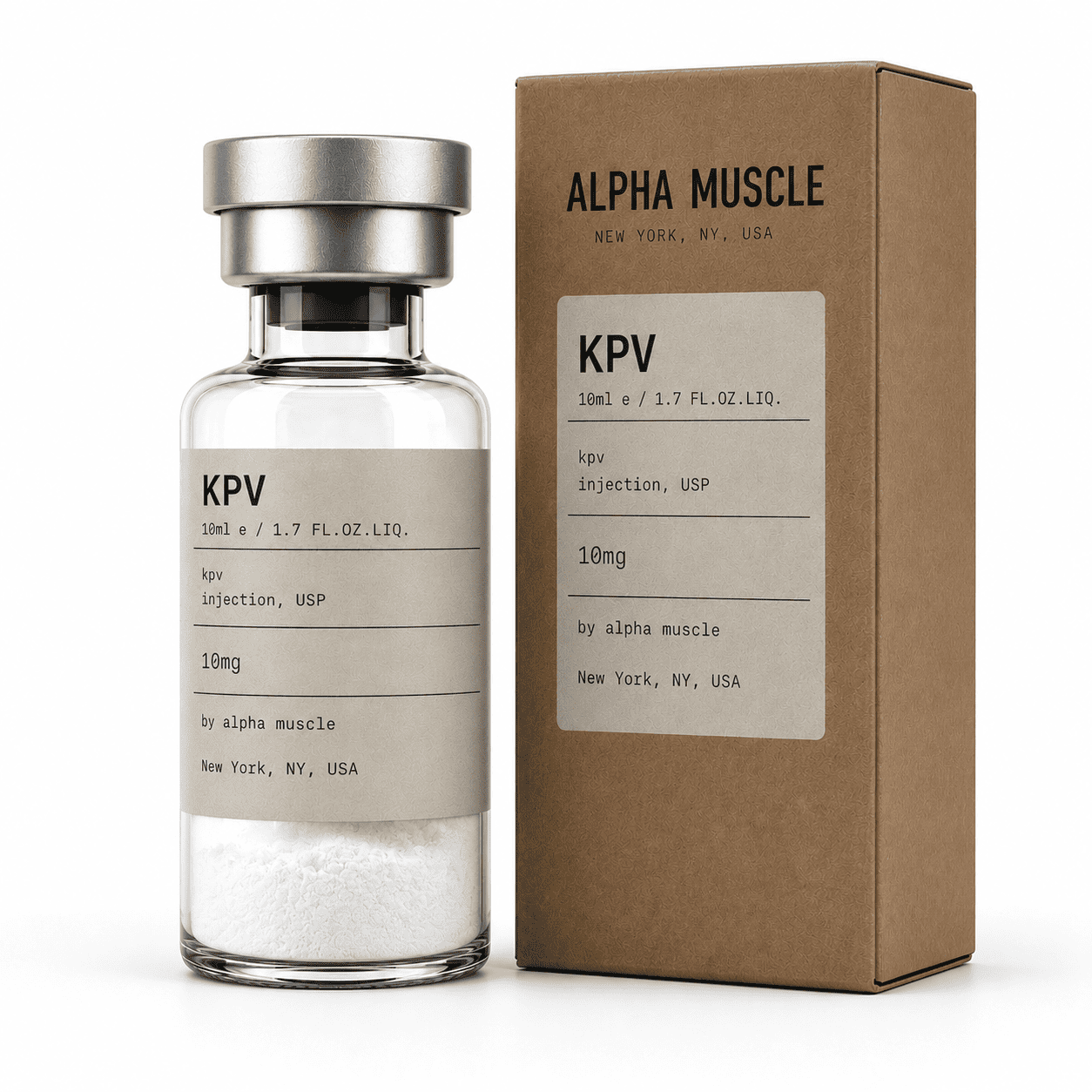
Description
Estimated delivery 1-2 weeks
Products are shipping without brand labels for security reasons.
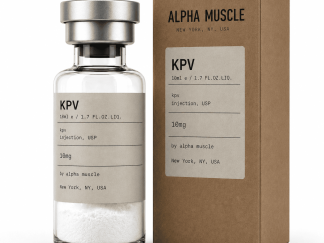
KPV (Lysine–Proline–Valine) is a C‑terminal tripeptide fragment of α‑melanocyte‑stimulating hormone (α‑MSH) studied for its potent anti‑inflammatory properties without melanotropic side effects[1][2]. Research demonstrates KPV reduces pro‑inflammatory cytokines in models of inflammatory bowel disease and systemic inflammation[3]. This educational protocol presents a once‑daily subcutaneous approach using a practical dilution for precise insulin‑syringe measurements.
How This Works
KPV is the C‑terminal tripeptide sequence (residues 11–13) of α‑melanocyte‑stimulating hormone (α‑MSH), retaining potent anti‑inflammatory activity without the hormone’s melanotropic effects[1][2]. Preclinical studies demonstrate KPV reduces pro‑inflammatory cytokines (TNF‑α, IL‑6, IL‑1β) and modulates immune cell activity in models of inflammatory bowel disease, colitis, and systemic inflammation[3]. The peptide’s mechanism involves inhibition of nuclear factor kappa B (NF‑κB) signaling and modulation of inflammatory mediator release[2]. Subcutaneous administration provides systemic delivery with rapid absorption and sustained anti‑inflammatory effects observed in daily dosing protocols[4].
Potential Benefits & Side Effects
Observations from preclinical and early‑stage research.
- Anti‑inflammatory activity: Reduces pro‑inflammatory cytokines and modulates immune responses in models of inflammatory bowel disease and systemic inflammation[3].
- Oral and subcutaneous efficacy: Multiple routes of administration show activity, with subcutaneous injection favored for systemic delivery and consistent bioavailability[4].
- Wound healing support: Preclinical data suggest KPV may support tissue repair and wound healing processes through inflammatory modulation[5].
- Generally well tolerated: Occasional mild injection‑site reactions (redness, slight swelling) may occur; systemic side effects are rarely reported in research protocols.
- No melanotropic effects: Unlike full α‑MSH, KPV does not affect melanocyte activity or skin pigmentation[1].
Lifestyle Factors
Complementary strategies for optimizing inflammatory balance.
- Anti‑inflammatory diet: Emphasize whole foods, omega‑3 fatty acids, polyphenols, and minimize processed foods and refined sugars.
- Stress management: Chronic stress elevates inflammatory markers; incorporate stress‑reduction practices (meditation, yoga, adequate sleep).
- Physical activity: Regular moderate exercise supports healthy inflammatory balance; avoid overtraining which can increase inflammation.
- Sleep optimization: Prioritize 7–9 hours of quality sleep nightly to support immune regulation and inflammatory homeostasis.
- Gut health: Support microbiome diversity through probiotic‑rich foods and adequate fiber intake, particularly relevant for inflammatory bowel conditions.
- Reconstitute: Add 3.0 mL bacteriostatic water → ~3.33 mg/mL concentration.
- Typical daily range: 200–500 mcg once daily (gradual titration recommended).
- Easy measuring: At 3.33 mg/mL, 1 unit = 0.01 mL ≈ 33.33 mcg on a U‑100 insulin syringe.
- Storage: Lyophilized: freeze at −20 °C (−4 °F) or below; after reconstitution, refrigerate at 2–8 °C (35.6–46.4 °F) and use within 30 days; avoid freeze–thaw cycles.
- Goal: Support reduction of systemic inflammation and modulate immune responses without melanotropic effects[1][3].
- Schedule: Daily subcutaneous injections for 8–12 weeks (extend to 16 weeks if desired).
- Dose Range: 200–500 mcg daily with gradual weekly titration.
- Reconstitution: 3.0 mL per 10 mg vial (~3.33 mg/mL) for accurate unit measurements.
- Storage: Lyophilized frozen at −20 °C (−4 °F) or below; reconstituted refrigerated at 2–8 °C (35.6–46.4 °F); avoid repeated freeze–thaw.
Dosing Protocol
Suggested daily titration approach.
- Start: 200 mcg daily; increase by ~100 mcg weekly as tolerated[4][5].
- Target: 400–500 mcg daily by Weeks 4–8 for maintenance anti‑inflammatory effects.
- Frequency: Once per day (subcutaneous).
- Cycle Length: 8–12 weeks; optional extension to 16 weeks under monitoring.
- Timing: Any consistent time; rotate injection sites systematically.
Storage Instructions
Proper storage preserves peptide quality and stability.
- Lyophilized: Store at −20 °C (−4 °F) or below in dry, dark conditions; protect from moisture and light[6][7].
- Reconstituted: Refrigerate at 2–8 °C (35.6–46.4 °F); use within approximately 30 days[7].
- Allow vials to reach room temperature before opening to minimize condensation uptake.
- Avoid freeze–thaw cycles: Do not refreeze reconstituted peptide solutions; prepare aliquots if long‑term storage is needed[6].
Dosing & Reconstitution Guide
Educational guide for reconstitution and daily dosing
Standard / Gradual Approach (3 mL = ~3.33 mg/mL)
| WEEK | DAILY DOSE (MCG) | UNITS (PER INJECTION) (ML) |
|---|---|---|
| Week 1 | 200 mcg | 6 units (0.06 mL) |
| Week 2 | 300 mcg | 9 units (0.09 mL) |
| Week 3 | 400 mcg | 12 units (0.12 mL) |
| Weeks 4–8 | 500 mcg | 15 units (0.15 mL) |
Frequency: Inject once daily subcutaneously. This schedule uses the largest practical dilution (3.0 mL) to maintain manageable injection volumes. For ≤10‑unit (≤0.10 mL) administrations, consider 30‑ or 50‑unit insulin syringes for improved readability and more precise measurement[10].
Reconstitution Steps
- Draw 3.0 mL bacteriostatic water with a sterile syringe.
- Inject slowly down the vial wall; avoid foaming.
- Gently swirl/roll until dissolved (do not shake).
- Label and refrigerate at 2–8 °C (35.6–46.4 °F), protected from light.
Reconstitution Steps
- Draw 3.0 mL bacteriostatic water with a sterile syringe.
- Inject slowly down the vial wall; avoid foaming.
- Gently swirl/roll until dissolved (do not shake).
- Label and refrigerate at 2–8 °C (35.6–46.4 °F), protected from light.
Supplies Needed
Plan based on an 8–16 week daily protocol with gradual titration.
- Peptide Vials (KPV, 10 mg each):
- 8 weeks ≈ 3 vials
- 12 weeks ≈ 4 vials
- 16 weeks ≈ 6 vials
- Insulin Syringes (U‑100):
- Per week: 7 syringes (1/day)
- 8 weeks: 56 syringes
- 12 weeks: 84 syringes
- 16 weeks: 112 syringes
- Bacteriostatic Water (10 mL bottles): Use ~3.0 mL per vial for reconstitution.
- 8 weeks (3 vials): 9 mL → 1 × 10 mL bottle
- 12 weeks (4 vials): 12 mL → 2 × 10 mL bottles
- 16 weeks (6 vials): 18 mL → 2 × 10 mL bottles
- Alcohol Swabs: One for the vial stopper + one for the injection site each day.
- Per week: 14 swabs (2/day)
- 8 weeks: 112 swabs → recommend 2 × 100‑count boxes
- 12 weeks: 168 swabs → recommend 2 × 100‑count boxes
- 16 weeks: 224 swabs → recommend 3 × 100‑count boxes